
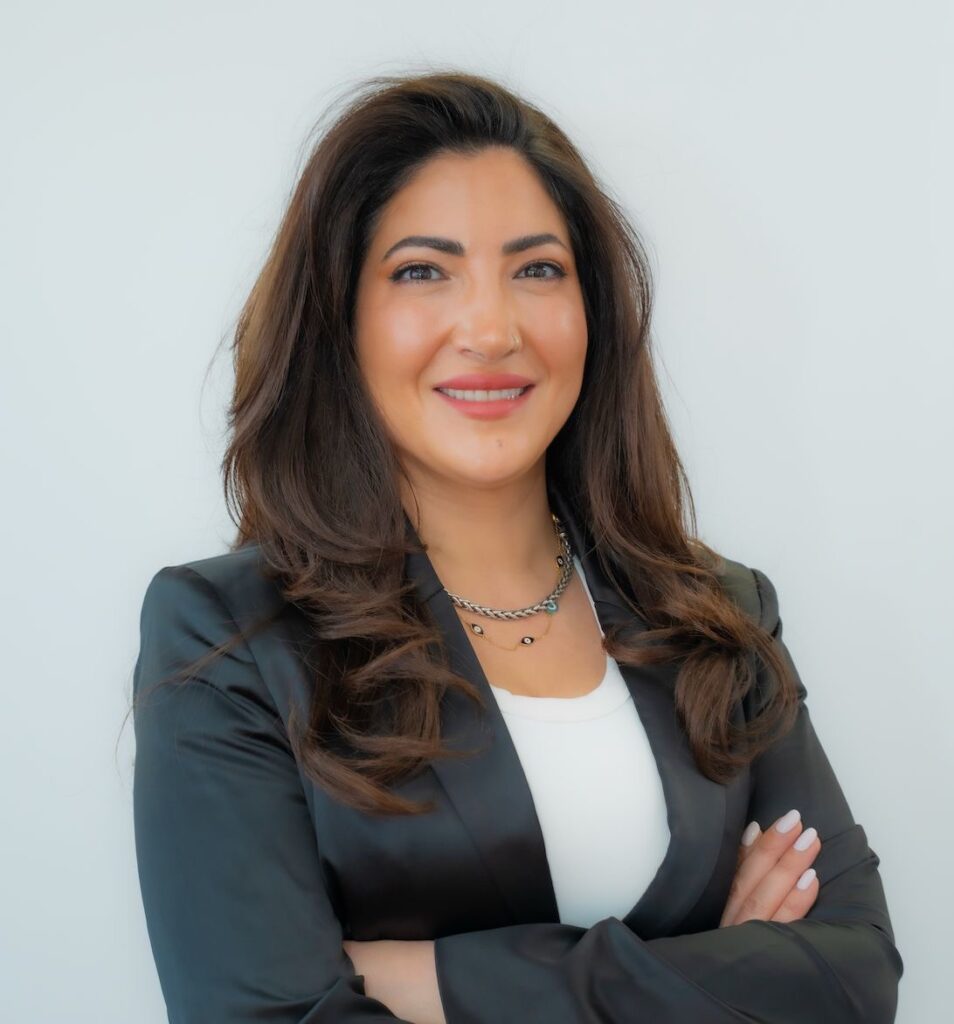
Dima Mansour is a Canadian professional, community advocate and President of the Alawite Association of Canada, with a longstanding commitment to civic engagement, community leadership and advocacy.
She holds a university degree in Political Science and Criminology. During her university years, Dima served as Vice President of the Arab Students’ Association and as a board member of the Syrian Students’ Association, contributing to initiatives focused on cultural awareness, student engagement and community dialogue. Professionally, Dima has built her career in operations and organizational leadership, with extensive experience in commercial real estate.
Her professional experience has developed a strong foundation in strategic planning, communication, organizational development and execution. Alongside her professional career, Dima has remained deeply engaged in issues affecting the Alawite community in Syria and the diaspora. As President of the Alawite Association of Canada, she works to strengthen the community’s cultural identity and representation while advocating for the protection, dignity, religious freedom and equal citizenship of Alawites and other communities in Syria.
Her advocacy focuses on the protection of civilians, raising awareness of displacement, abductions, unlawful detention and other abuses affecting Alawite communities, as well as the principle that accountability for crimes must be individual and never imposed collectively on an entire religious community. Dima’s work also emphasizes dialogue and cooperation with Christians, Druze, Kurds and other vulnerable Syrian communities. Her approach is rooted in the belief that a sustainable future for Syria requires equal citizenship, religious freedom, protection of civilians and minorities, accountability under the rule of law and meaningful participation without discrimination based on religion or identity. Through the Alawite Association of Canada, Dima is working to build stronger institutional representation for the Alawite community in Canada and beyond, and to ensure that Alawite perspectives and humanitarian concerns are represented in conversations with policymakers, human rights organizations, religious freedom advocates and the broader international community.